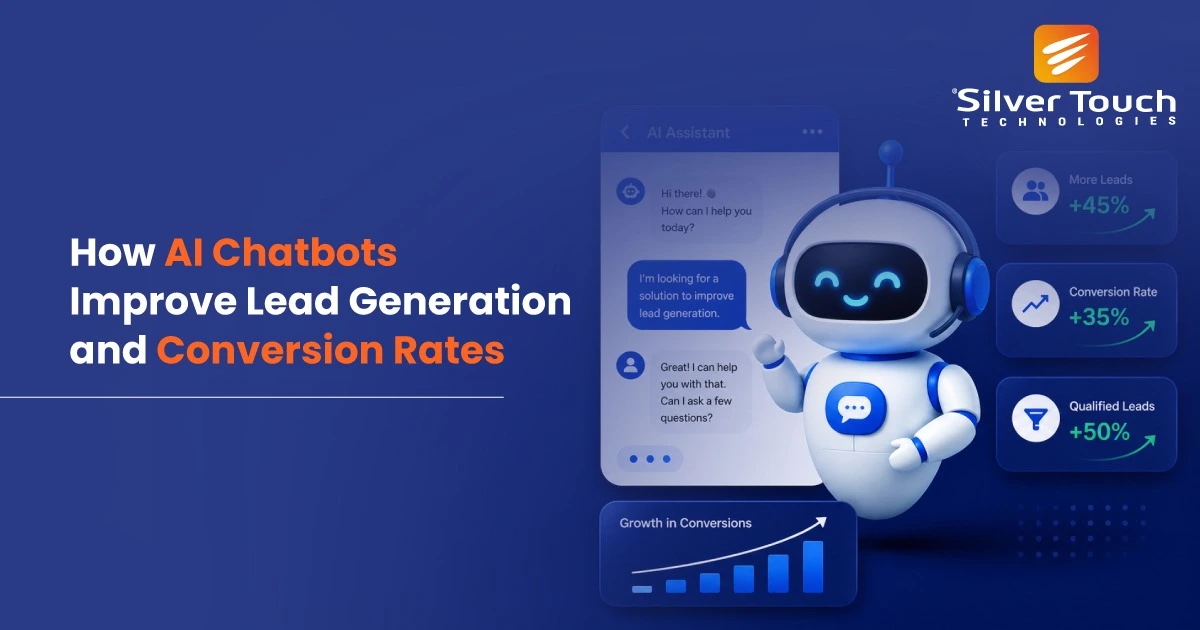
In today’s hyper competitive U.S. digital landscape, capturing a prospect’s attention is harder than ever. Buyers research online, expect instant answers, and abandon brands that make them wait. This is exactly why AI chatbots for lead generation have become one of the fastest growing marketing technologies in North America. According to industry research, businesses using AI powered lead generation tools report up to a 67% increase in qualified leads and a 30% lift in conversion rates within the first six months of deployment.
Whether you run a SaaS company in San Francisco, an ecommerce store in New York, or a B2B services firm in Texas, conversational AI marketing is no longer optional. It is the engine driving the modern sales funnel. In this guide, we will break down exactly how AI chatbots boost lead generation, improve conversion rates, and deliver measurable ROI for U.S. businesses.
What Is an AI Chatbot for Lead Generation?
An AI chatbot for lead generation is an intelligent virtual assistant powered by natural language processing (NLP), machine learning, and large language models. Unlike rule based bots of the past, modern AI chatbots understand context, learn from every conversation, and respond like a trained sales representative.
These bots live on your website, landing pages, Facebook Messenger, WhatsApp Business, and even SMS. They engage visitors the moment they arrive, ask qualifying questions, capture contact details, and route hot leads directly to your sales team without human intervention. The best AI chatbot software integrates with CRMs like HubSpot, Salesforce, and Zoho, ensuring every lead is logged, scored, and nurtured automatically.
Why U.S. Businesses Are Investing in AI Chatbots in 2026
The American market has embraced AI customer engagement faster than almost any other region. Three forces are driving this surge. First, customer expectations have shifted permanently. Eighty two percent of U.S. consumers now expect a response within 10 minutes, a standard impossible to meet with human only teams.
Second, labor costs continue to rise. Hiring and training a sales development representative (SDR) in major U.S. cities can exceed $80,000 per year. An AI sales chatbot delivers comparable lead qualification value at a fraction of the cost. Third, modern AI tools have become remarkably accessible. Platforms like Drift, Intercom, ChatGPT powered assistants, and Tidio allow companies of any size to deploy enterprise grade chatbots in days, not months.
How AI Chatbots Improve Lead Generation
Engaging Visitors at the Perfect Moment
A static contact form converts about 2% of visitors. A well designed lead generation chatbot can convert 15 to 30% of the same traffic. Why? Because it greets users proactively, answers questions instantly, and removes friction. AI chatbots detect visitor intent through behavior signals such as pages visited, time on site, and referral source, then trigger personalized messages at the highest converting moment.
Qualifying Leads 24/7
Automated lead qualification is where AI truly shines. Using BANT (Budget, Authority, Need, Timeline) frameworks or custom scoring logic, the chatbot asks the right questions in a natural, conversational tone. Leads are sorted into hot, warm, and cold segments before they ever reach your sales team. This eliminates the wasted hours SDRs spend on unqualified prospects and dramatically improves pipeline quality.
Capturing Data Without Forms
Long forms kill conversions. Every additional field reduces submission rates by up to 11%. AI chatbots collect the same information through micro interactions, one question at a time, feeling more like a friendly conversation than a data extraction. Studies from U.S. SaaS companies show form replacement with conversational flows can lift lead capture by three to five times.
Personalizing the Buyer Journey
AI chatbots remember context. A returning visitor isn’t asked the same questions twice. The bot can reference previous interactions, recommend relevant products, and adapt its tone based on user persona. This level of AI customer engagement creates the kind of personalized experience that builds trust and accelerates buying decisions.
How AI Chatbots Improve Conversion Rates
Reducing Response Time to Zero
Speed to lead is the single biggest predictor of conversion. According to Harvard Business Review, contacting a lead within five minutes makes them 21 times more likely to convert than contacting them after 30 minutes. AI chatbots respond in under one second, every time, day or night, weekends and holidays included.
Guiding Users to the Right Product
For ecommerce and SaaS businesses, decision paralysis is a major drop off cause. Chatbot conversion rate optimization strategies use AI to recommend products, walk users through pricing tiers, and answer objections in real time. This guided selling approach typically increases checkout completion by 20 to 35%.
Recovering Abandoned Carts and Sessions
AI chatbots detect exit intent and trigger personalized offers such as discount codes, free shipping, or live agent handoffs before the visitor leaves. For U.S. ecommerce brands, abandonment recovery via chatbot averages 12 to 18% recovery rate, significantly higher than email only sequences.
Booking Meetings Automatically
For B2B teams, the holy grail is moving a prospect from interested to booked demo. AI chatbots integrate with Calendly, Google Calendar, and HubSpot Meetings to schedule calls instantly. No back and forth emails. No lost momentum. The conversion path from website visitor to sales meeting can shrink from 7 days to 7 minutes.
Key Metrics to Track
To prove ROI on your AI chatbot for lead generation, monitor these KPIs.
Engagement Rate is the percentage of visitors who interact with the chatbot. Lead Capture Rate measures conversations that result in qualified contact info. Conversion Rate tracks leads that progress to demos, trials, or purchases. Cost Per Lead (CPL) is total chatbot spend divided by qualified leads generated. Sales Cycle Length tracks time from first interaction to closed deal. Customer Satisfaction Score (CSAT) records post chat feedback ratings.
U.S. companies typically see CPL drop by 40 to 60% within the first quarter after launching an AI chatbot.
Best Practices for U.S. Businesses
To maximize results from conversational AI marketing, follow these proven practices.
Use a hybrid model that combines AI automation with human handoff for complex queries. Train your chatbot on real customer questions, FAQs, and sales call transcripts. Comply with U.S. privacy regulations including CCPA and TCPA. Always disclose AI usage and offer opt out options. A/B test welcome messages, qualifying questions, and CTAs continuously. Integrate the chatbot with your CRM, marketing automation, and analytics stack from day one.
Choosing the Best AI Chatbot Software
When evaluating the best AI chatbot software for the U.S. market, prioritize platforms offering native integrations with Salesforce and HubSpot, GPT 4 or Claude level language models, multi channel deployment across web, WhatsApp, Messenger, and SMS, built in analytics dashboards, and SOC 2 or HIPAA compliance for regulated industries.
Top rated platforms in 2026 include Drift, Intercom Fin, ChatGPT Enterprise, Ada, Tidio, and ManyChat. Each is suited to different business sizes and use cases.
Final Thoughts
AI chatbots are no longer a futuristic experiment. They are a proven, ROI positive growth lever for U.S. businesses competing for attention in saturated markets. By engaging visitors instantly, qualifying leads automatically, and personalizing every conversation, AI chatbots for lead generation turn passive website traffic into active pipeline around the clock.
If you are still relying on contact forms and human only response teams, you are leaving revenue on the table. The companies winning in 2026 are those that pair human creativity with AI scale. Now is the time to deploy a chatbot that works while you sleep, qualifies leads while your team focuses on closing, and lifts your conversion rate to the next level.
Ready to transform your lead generation? Partner with an experienced AI implementation team to design, deploy, and optimize a chatbot tailored to your business goals and start converting more visitors into customers today.